
ecobee EMS thermostats provides annual savings of $3,445 at 4,000 square foot retail location resulting in 72% ROI and payback period of 7 months.
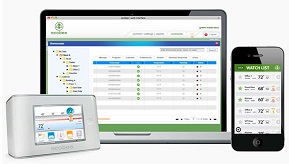
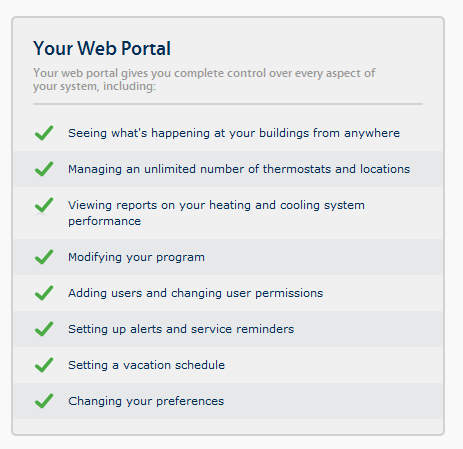
Installing the ecobee EMS thermostats delivered savings by ensuring all HVAC units ran according to a standard schedule, limiting control by users at the retail location, enabling remote troubleshooting and diagnostics, and reducing the number of truck rolls.
Standard Operating Procedures
The original programmable thermostats installed at the retail location were not programmed in the same way and were not programmed as unoccupied during weekends and holidays when the building was unoccupied. In addition, one of the thermostats was programmed as occupied from 8 am to 6pm, while the other thermostat was programmed as occupied from 8 am until midnight.
Because the original thermostats were not connected to the internet, it was virtually impossible to detect these types of discrepancies. The ecobee EMS allows thermostats to be grouped together such that all thermostats can run the same setback and holiday schedules without having to program the thermostats individually. By running the standard program and programming for weekends and holidays the estimated savings are $2,324 annually.
The savings are estimated as follows:
Savings = ($20,000)[(2/7)(0.2)+(5/7)(0.1)(6/8)+(10/365)*(0.2)]
Limited Local and Web Remote Control
Within the first three months of installation of the ecobee EMS, the property management group received two service calls from the retail location because the temperature at the location felt uncomfortable and the branch manager requested a temperature change from 72 F to 70 F. Normally this would have required a truck roll to service this request (to unlock the plastic box and make the change). The cost for a service call is $200.
The ecobee EMS allows temporary hold actions to be performed at the retail location within a limited temperature range. In addition to allowing these changes to be made directly at the retail location, they can also be made by the property manager through the EMS web portal. Local control (or remote control through the web portal) saved the cost of two truck rolls in the first three months. By providing limited local control, the property manager was also able to lower the occupied temperature from 72 F to 70 F further reducing energy costs without impacting comfort and productivity. The annual estimated savings from allowing the change to be made through the ecobee EMS web portal and reducing the occupied temperature is $1121.
The savings are estimated as:
Savings = ($200)(3 truck rolls per year) + (20,000)(10/24)*(2/32)
Remote Diagnostics
During the initial test period, one of the rooftop units stopped working correctly over the weekend. This caused the temperature in the building to drop below 57 F. The ecobee EMS sent out a low temperature alarm and allowed an operator to diagnose this issue and arrange a support call over the weekend when the retail location was not being used. With the previous programmable thermostats, this situation would not have been detected until staff arrived on Monday morning resulting in a branch closure for some period of the work day impacting customers and staff.
Return on Investment
The two ecobee EMS thermostats were installed at a cost of $1,000 each ($750 cost and $250 installation) resulting in a total cost of $2,000.
The estimated annual savings for the ecobee EMS thermostats, not including productivity gains from remote diagnostics is $3,445.
The ROI on the ecobee EMS is 72% and the payback is approximately 7 months.
The customer has other locations which do not use programmable thermostats and in those locations, the ROI will be much higher and the payback much quicker."